
One of the Simplest Nervous System Habits I’ve Ever Kept
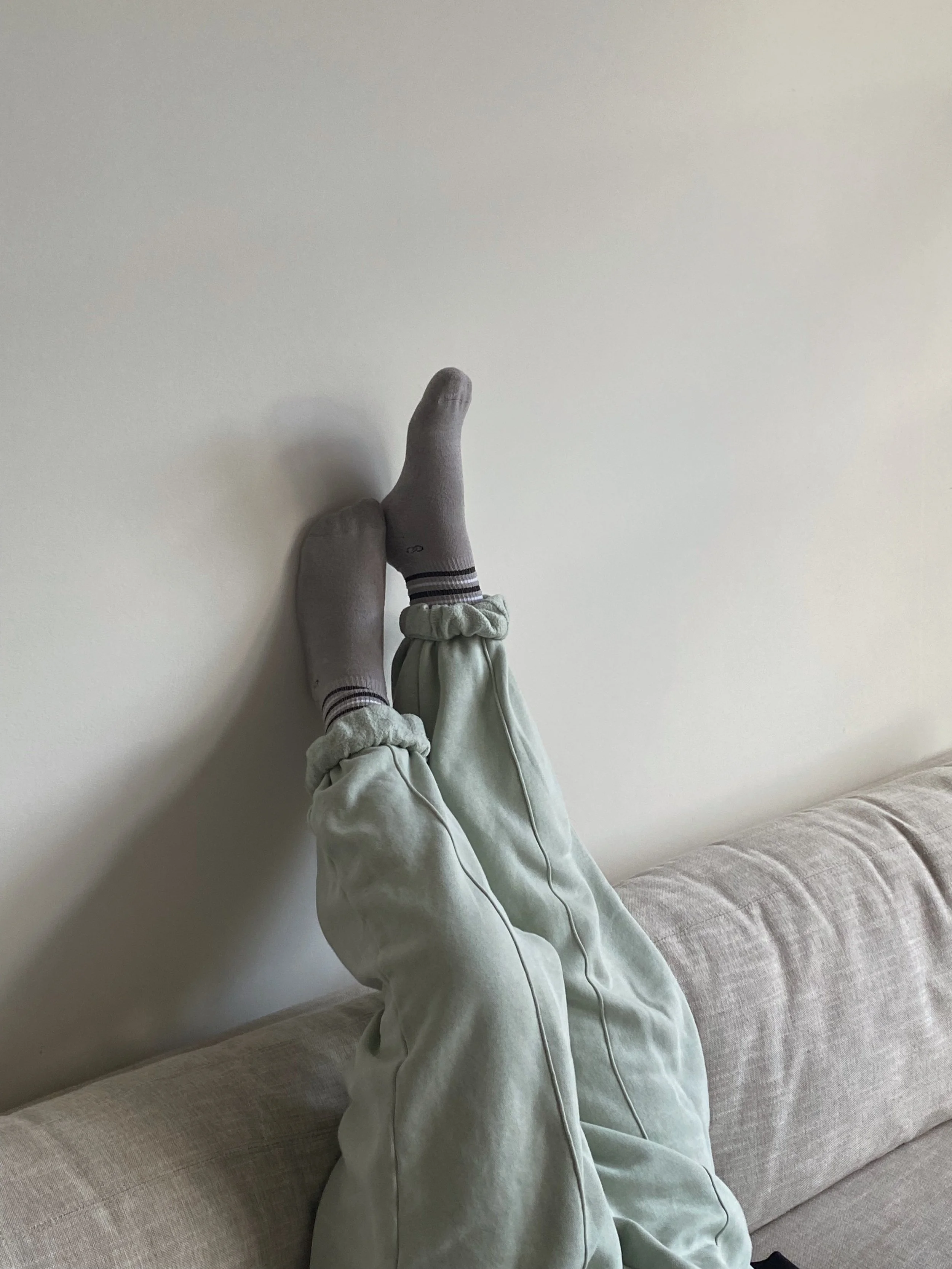
One of the easiest things I’ve add to my routine to support my nervous system is also one of the least glamorous or “wellness hack-y” which is honestly why it’s stuck.
I started taking time for myself after work. I know, revolutionary idea right?
Not in the latest or trending “hot girl routine” way. And definitely not having a perfectly curated, two-hour wind down ritual. Just, intentionally. A pause to really disconnect from the previous moments of the day so I can start a clean slate for the night ahead.
Because most days look the same: screens, sitting, shoulders creeping up toward my ears, jaw tight, brain juggling a bajillion things at once. Even when work ends, my body doesn’t automatically get the memo that we’re done for the day. It can stay braced, on high alert. Half-expecting another notification, another task or demand. And sure, there is an on-going list of things that I could get done and work later, but when you work at home and work for yourself you need to set those boundaries. (My Brick has been a life saver for this and I’ll write another post about it!)
So, instead of jumping straight from work mode into dinner, plans, or craft time, I started giving myself a buffer. Something that gently says “Hey! We’re done for the day. You can relax even more now.” When I worked a job outside of the house, my therapist recommended I start doing this to signal to my brain and body that we were switching modes and entering safe space (aka my home.) It’s important to have a visual cue that, with repetition, triggers to your brain that you’re switching gears. So for a while, I would get to my front door and pause, take a deep breath and visualize pulling the thoughts or fog from earlier in the day out of my head and floating away.
If you also work outside of the house, I recommend having a visual cue like this other than just driving home to signal that work is done. And while this was great at getting me to pause, it still took quite a bit for my brain and body to get the memo that we were home and could actually unwind. That’s where somatic practices comes in.
Somatic practices are anything that help you connect with your body. Our brain and body/nervous system don’t speak the same language so that’s why when you’re trying to talk yourself into believing something is true - in this case that work is done - your body won’t understand because you’re still in work mode, registering as being active.
When I started adding in visual cues and combining them with some time for somatic practices, things started to shift.
Some days it looks like hanging over the edge of the bed, letting my arms drop heavy and loose, undoing all that tech-neck tension that builds up without even realizing it. Other days it’s a few deep belly breaths with my legs up the wall. Almost always I tap my chest or wrap my arms around myself and just land back into my body after being in my head all day. It’s really that simple and can take 5-10 minutes max.
Your visual cue could be a simple visualization like I shared, putting your laptop and notebooks out of sight, cleaning up your desk and shutting everything off, etc. Whatever it is that signals “work’s done” for you, add it as part of your work closing shift.
Notice how none of these are crazy or require much motivation, discipline, or the “right” mood. They’re just small ways of slowing down and reconnecting with yourself - enough to signal safety, to quiet the mental noise so the rest of the night doesn’t feel so rushed or restless.
That’s the part we miss when talking about nervous system care. It’s not about doing the most or these elaborate practices or having this expectation to be regulated all the damn time (news flash: that’s not realistic and isn’t the goal). It’s about consistency and intention. When you give yourself even a few minutes like this, your brain starts to recognize the pattern, which then signals to your nervous system to switch into rest mode. It’s a domino effect because your system is always listening and paying attention.
At first, it’s a conscious choice, sure. Eventually it can become second nature like flipping a light switch. And on days when I need to lean into a more active practice? I do that because trying to force stillness when you feel like the energizer bunny just isn’t the solution and usually doesn’t work.
If you’re feeling more activated and buzzy, have you visual cue and maybe your practice looks like brain dumping everything on your mind into a journal, dance or shake it out, get a light sweat in, stretch, go for a walk.
Or just do something that you genuinely enjoy and look forward to, but take your time with it. Take a warm shower, do your skincare slowly, change into your favorite pjs - just let yourself settle in.
Only after you’ve given yourself some TLC, make dinner, turn on your show, settle in for time with your partner. It’s wild how different those same activities can feel when your nervous system has actually had a change to shift gears.
The goal isn’t to have the perfect evening routine. It’s to create a moment, even a small one, that helps your body understand the work day is over. That you don’t need to be “on” anymore and rest is allowed.
If you’re used to pushing through and feeling wired all the time, this can feel unfamiliar and super uncomfortable at first. That doesn’t mean you’re doing it wrong. It just means your system is learning something new and needs time to adjust.
Start where you are, keep it simple, and let it look a little different until you find what works for you and what you like.
If this resonated or you want more ideas on how to add this to your routine, I created a free guide with 10 low-lift somatic practices you can start today. Simple, supportive, and super easy to come back to whenever you need it! 💛